How to Check Your Cause List Online in Pakistan: A 2026 Guide for Advocates

Every working advocate in Pakistan starts the day with the same question: is my case listed today? The answer lives in the cause list: the official daily schedule of cases set for hearing in a given court. Miss it, and you risk an adverse order, a missed appearance, or an unhappy client. Check it late, and you lose the morning scramble to prepare.
The good news is that you no longer have to wait for a printed list pinned outside the courtroom. Almost every superior court in Pakistan now publishes its cause list online, and with the right routine you can confirm your hearings for the day in under two minutes. This guide walks through exactly where to find the cause list for the Supreme Court, the High Courts, and the district judiciary, how to search it by advocate name, and how to make sure a listed case never slips past you again.
What a Cause List Is (and Why Advocates Check It Daily)
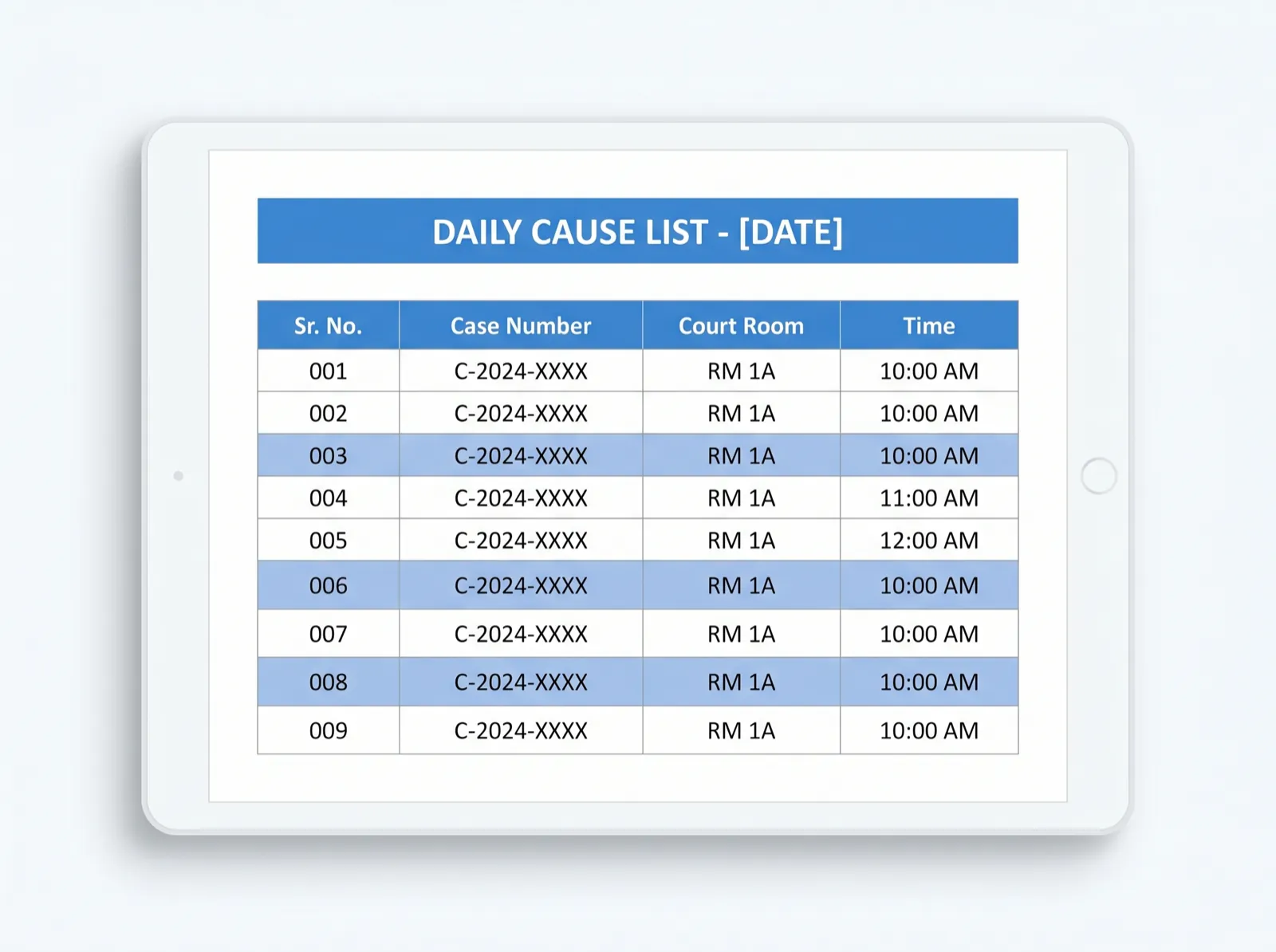
A cause list is the schedule a court issues for each working day, naming the cases to be heard, the bench or court number, and the order in which matters will be called. In Pakistan you will encounter several versions of the same document: the daily cause list (the standard schedule for the next working day), the regular list, the supplementary list (cases added after the regular list is published), and the urgent list (matters fixed on short notice).
For a practising advocate, the cause list is the single most important operational document of the day. It tells you whether you need to be in court, which court room to go to, and roughly when your matter will be reached. Because lists are re-issued daily and can change late in the evening before a hearing, checking the cause list is not a once-a-week task. It is a daily habit. The advocates who never miss a date are the ones who have made checking the list frictionless.
Where to Check Each Court's Cause List Online
Pakistan's courts publish their schedules on their own official websites, and most now offer searchable, date-filtered lists. Here is where each sits:
- Supreme Court of Pakistan. The apex court publishes its schedule online through its official cause list search, and the supreme court online cause list is one of the most frequently checked legal documents in the country, a reflection of how many advocates and litigants depend on it each day.
- High Courts. Each provincial High Court maintains its own daily list: Lahore (LHC), Islamabad (IHC), Sindh (SHC), Peshawar (PHC) and Balochistan (BHC). The Lahore High Court cause list in particular is consulted by thousands of advocates every working day, and the other High Courts see heavy daily demand of their own.
- District and Sessions Courts. The cause list district court matters most to the bulk of the country's litigation, which happens at the district level: civil courts, sessions courts, and family courts all publish daily lists through district judiciary portals such as District Judiciary Punjab, the Sindh district courts CFMS, and the KP district courts CFMIS portal.
The pattern across all of these courts is the same: the list you need is published online, but it lives on a different portal for every court, in a different format, and it changes daily. The demand is real, daily, and constant, which is exactly why having one reliable routine for finding your matters, rather than checking each court by hand, makes such a difference.

Common Questions Advocates Ask About Cause Lists
When is the next day's cause list published?
Most courts upload the daily cause list the evening before the hearing, though supplementary and urgent lists can appear later. Because of this, it is worth a final check the night before and again first thing in the morning.
Can I search the cause list by my own name?
Yes. This is the advocate wise cause list. Several court portals let you filter the day's list by advocate name so you see only your matters instead of scrolling hundreds of entries. Where that filter is missing, advocates typically search the PDF for their name or rely on a case-tracking tool to do it for them.
What if the list changes after I check it?
This is the real risk. Lists are revised, matters are added to supplementary lists, and case numbers move between benches. Checking once and assuming the schedule is fixed is how hearings get missed. The safest approach is an automated check that re-reads the list whenever it updates.
Is the online cause list official?
The lists published on official court websites are the authoritative schedules. Third-party tools are convenient for finding and trackingyour cases, but the court's own list remains the source of record. Always reconcile against it.
From "Advocate Wise Cause List" to Never Missing a Date
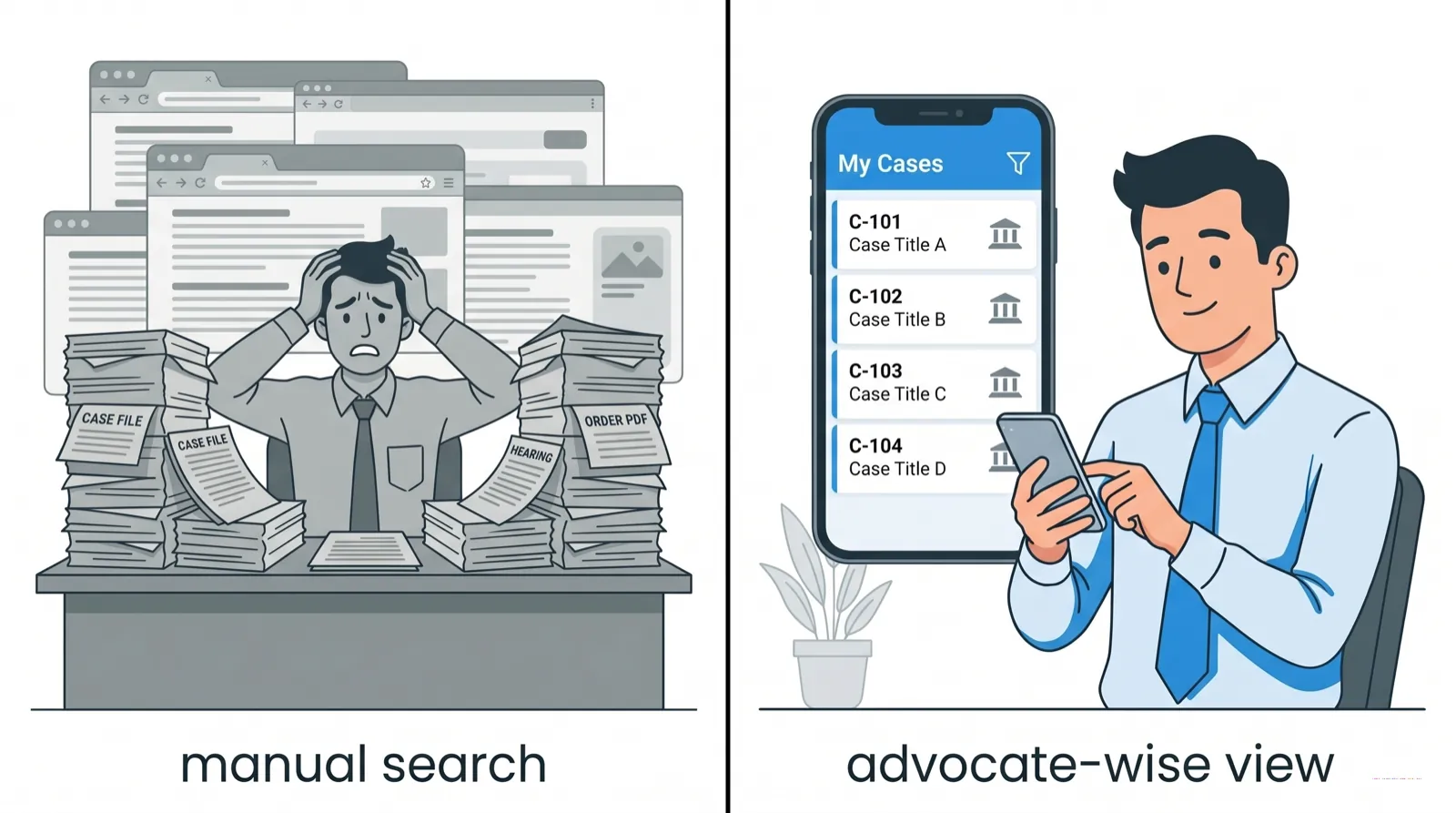
The phrase advocate wise cause list captures the exact problem most lawyers have. You don't want to read the whole list. You want to know, instantly, which of your cases are up, in which court, and when. Searching hundreds of entries across multiple courts every morning is slow, error-prone, and easy to skip on a busy day.
The workflow that breaks down looks like this: open three or four court websites, download each PDF, search for your name, copy the relevant matters into a notebook or WhatsApp message, and hope nothing changes before the hearing. It works until the day it doesn't: the day a supplementary list adds a matter you never saw. For a practising advocate, that single missed entry can cost a client's case.
The fix is to stop doing this manually. Instead of checking lists one by one, you want every case you are handling to be matched against the relevant cause lists automatically, so the cases that are listed for tomorrow surface on their own, already filtered to you.
How to Track Your Cause-List Cases Automatically
This is where a digital case diary changes the routine. With Digital Lawyer Diary, you record each case once, and the app keeps your hearings, dates, and matters organised in one place, so the question "am I listed tomorrow?" is answered the moment you open your dashboard, instead of after a morning of searching court websites.
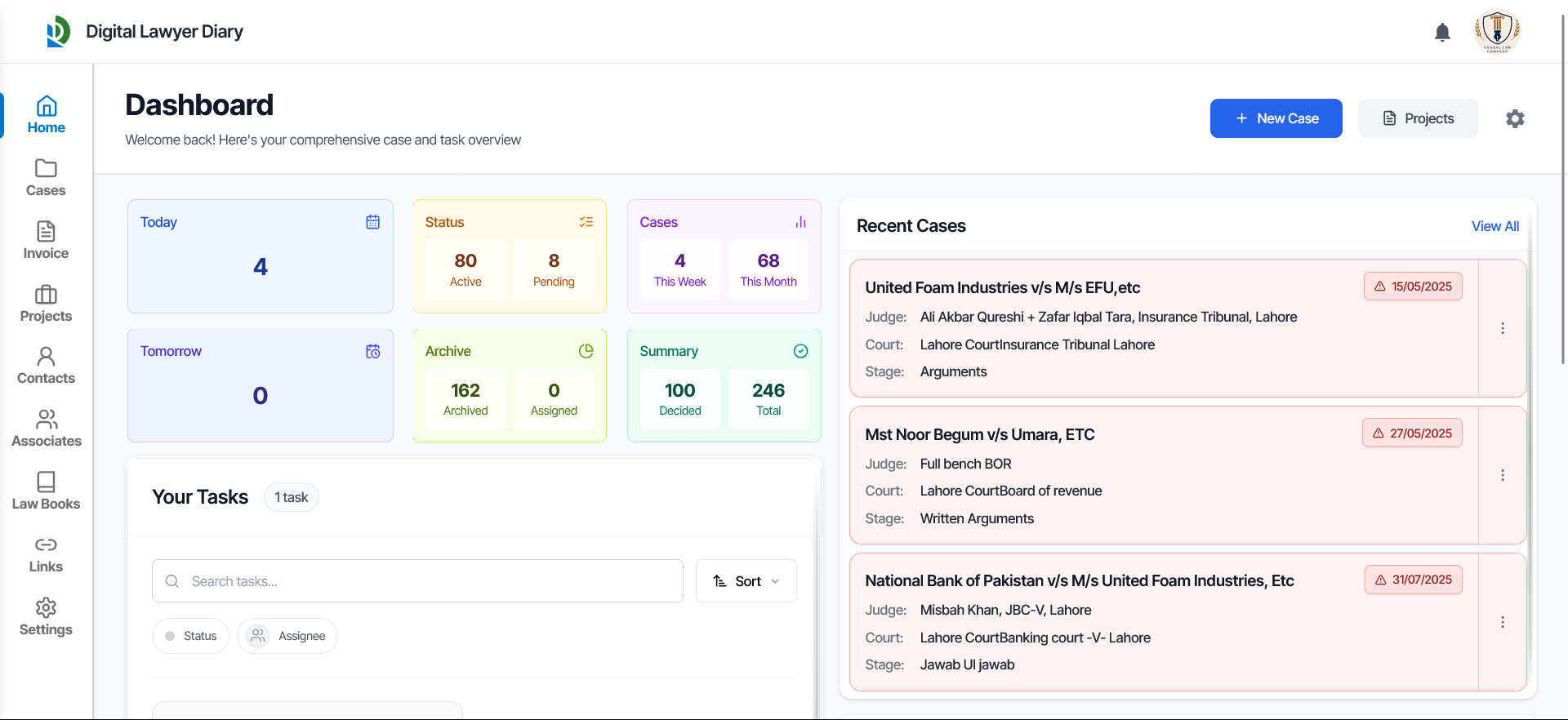
A good digital case diary gives an advocate three things the manual workflow cannot: a single view of every active case and its next date; reminders so a listed hearing never relies on memory; and a shared record your whole team can see. Built for legal professionals across Pakistan, India, and the wider region, it replaces the notebook-and-PDF scramble with a calendar that tells you where to be. The cause list still comes from the court, but the job of finding your matters in it, and remembering them, moves off your plate.
If you want the bigger picture on running your practice this way, see our guide on how to manage an advocate diary.
Conclusion
Checking your cause list online is no longer the hard part. Every major court in Pakistan, from the Supreme Court to the district judiciary, now publishes a daily, searchable list. The hard part is doing it reliably, every single day, across every court you practise in, without ever missing a late addition. That is where a daily habit plus the right tool turns a stressful morning ritual into a thirty-second check.
If you are tired of opening five court websites before breakfast, let your case diary do the watching for you. Start your free Digital Lawyer Diary today and keep every hearing, every date, and every case in one place, so you never miss a listed matter again.